Crop Solutions · Season guide
Tea
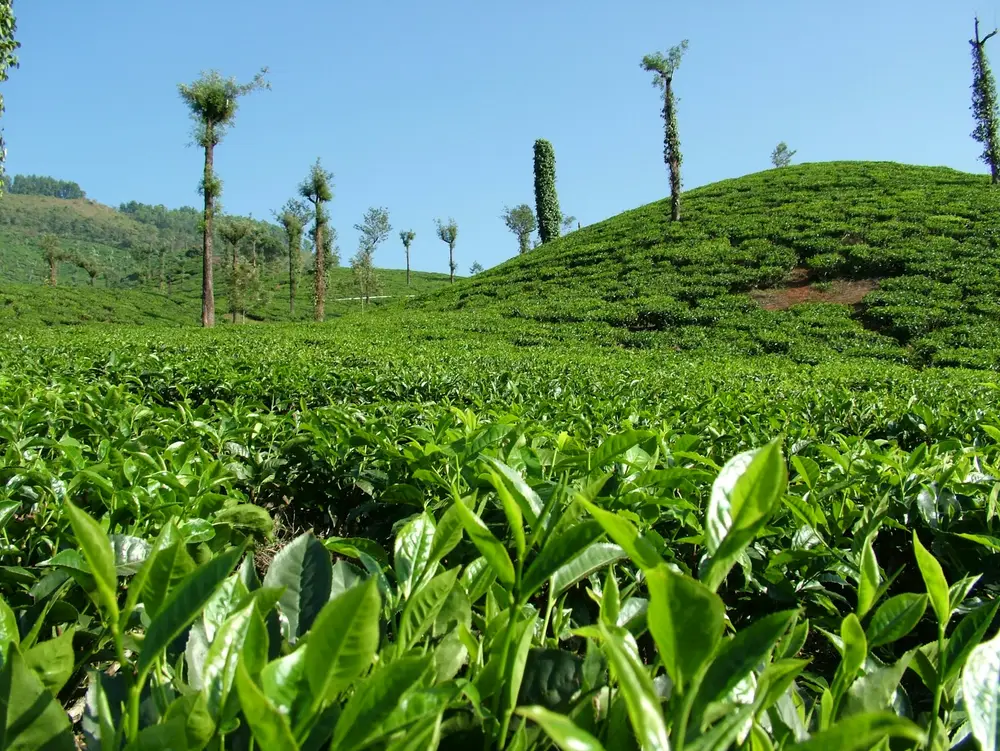
Tea is a perennial bush grown across North Bengal's Dooars, Terai and Darjeeling gardens. This program supports young bushes at establishment and keeps the plant fed through the long plucking season.
Season schedule
What to apply, and when
Stage timing comes from agricultural-university research (cited). Doses are Urvar's own label doses, shown per katha with bigha and acre equivalents.
1 bigha = 20 katha (West Bengal) · 1 acre ≈ 60.5 katha
- 1
First 12 months after planting1
Planting & establishment
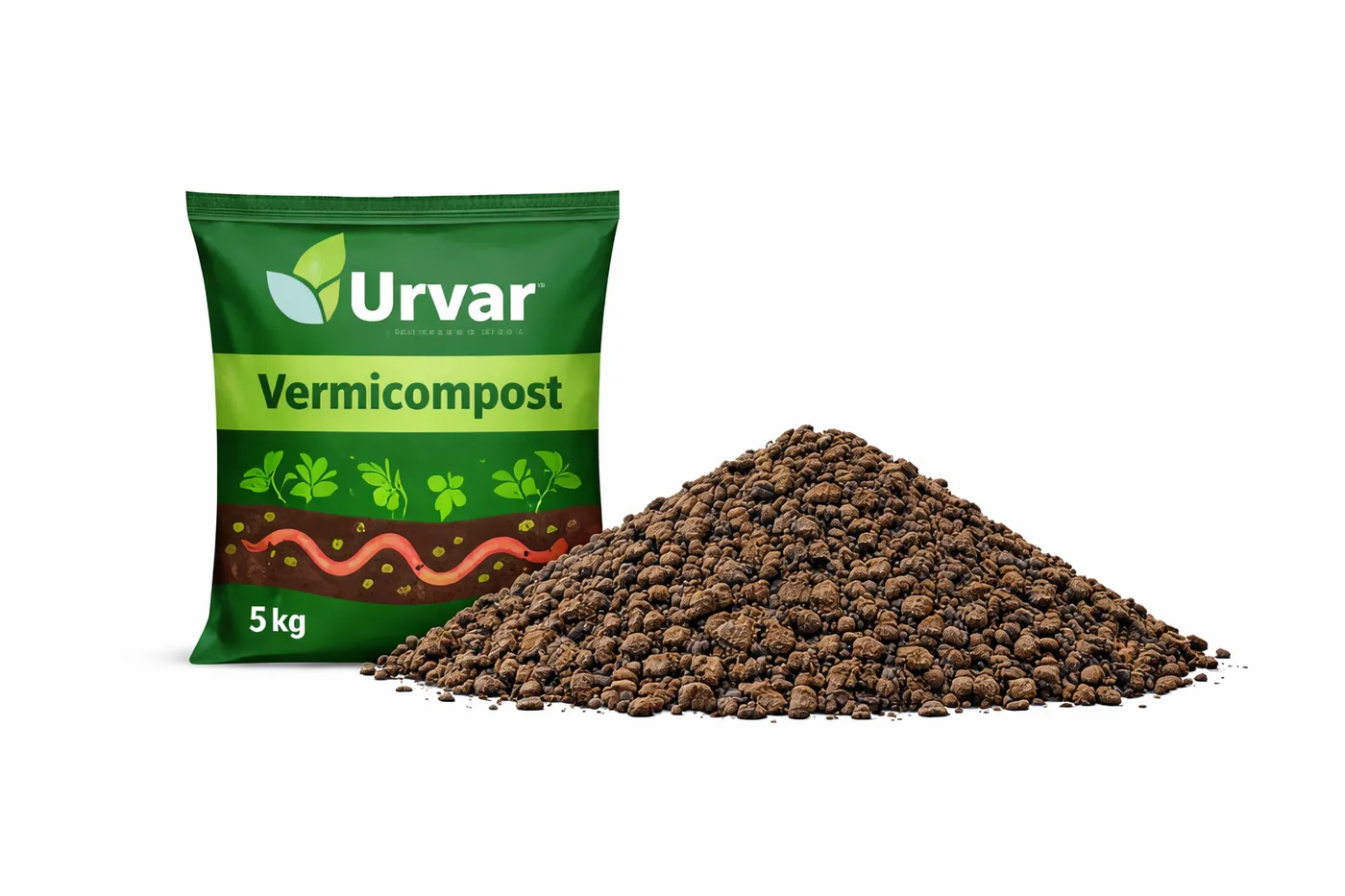
In UBKV trials at Cooch Behar, young tea grew best with vermicompost combined with the full recommended NPK dose for young tea (10:5:10 at 200 kg per hectare per year, per the Tea Research Association).
- 2
April–December (weekly plucking)2
Growing season
Tea is plucked at roughly weekly intervals through the main growing season, from April to December.

Humic Acid Liquid
Mix in 15–20 litres water per Katha
30–60 ml per katha
0.6–1.2 L per bigha · ≈ 1.8–3.6 L per acre
Label dose: foliar spray
- 3
December–March2
Winter dormancy
Growth slows sharply and plucking mostly stops during the winter dormant season.
Deficiency guide
Spot it, fix it
General symptoms that apply across crops. Confirm with a soil or leaf test before treating.3
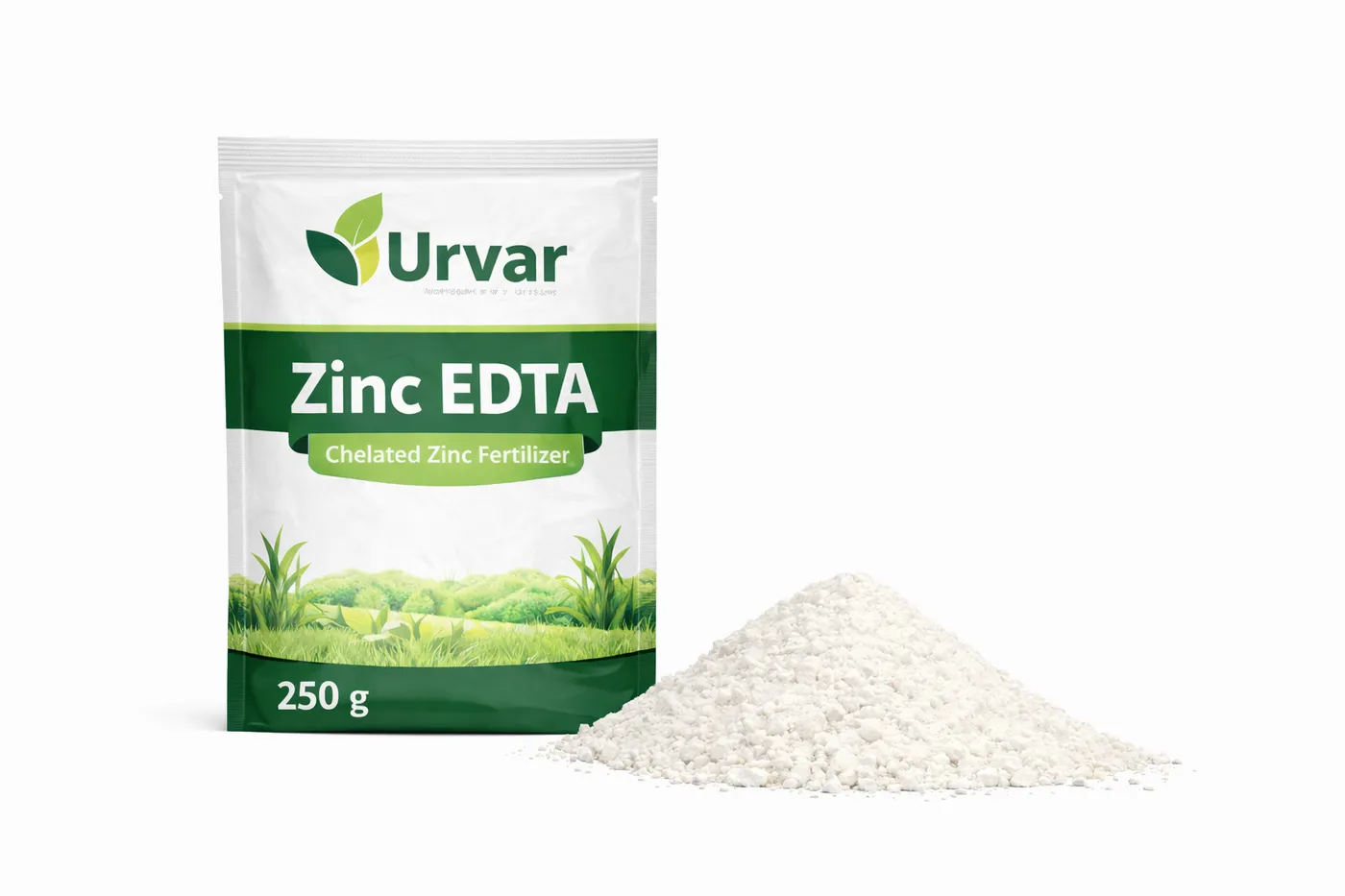
Upper leaves show interveinal chlorosis, eventually whitening. Leaves may be small and distorted, in a rosette form.
Growth is slow and stunted, and older leaves turn purple, especially on the underside.

Tea FAQ
Common questions
How do I convert a per-katha dose to bigha or acre?
Multiply by 20 for a West Bengal bigha (1 bigha = 20 katha), or by about 60.5 for an acre. Every dose on this page already shows all three.
Which Urvar products does the Tea program use?
Planting & establishment: Enriched Vermicompost. Growing season: Humic Acid Liquid.
Can I get a plan for my own field?
Yes. Message us on WhatsApp with your district, field size and planting date, and our team will reply with a plan.
Sources
- 1. Anjaneyulu, A. and Bhattacharjee, H. (2019). Yield and quality of young tea (Camellia sinensis (L.) O. Kuntze) with application of organic and inorganic fertilizers in arecanut garden. Journal of Pharmacognosy and Phytochemistry 8(1): 949–951. Department of Plantation Crops and Processing, Uttar Banga Krishi Viswavidyalaya (UBKV), Pundibari, Cooch Behar, West Bengal. www.phytojournal.com/archives/2019/vol8issue1/PartP/8-1-157-589.pdf
- 2. Tea World, Krishna Kanta Handiqui State Open University (KKHSOU): Plucking Round — general tea-agronomy teaching resource (not West Bengal-specific). kkhsou.ac.in/web/teaworld/page-details.php?name=Plucking-Round
- 3. TNAU Agritech Portal, Tamil Nadu Agricultural University: Mineral Nutrition – nutrient deficiency symptoms (general, all crops). agritech.tnau.ac.in/agriculture/agri_min_nutri_def_symptoms.html
Doses: Urvar Natural product labels. The Flowering Booster's timing follows its label guidance for flowering crops.
Get a Tea plan for your field
Tell us your district, field size and planting date on WhatsApp. Our team replies with a stage-by-stage plan and pricing.